Ghana is on track to pump its first barrel of crude in December but must be wary of seeing oil as the answer to all its problems, Vice President John Dramani Mahama said on Tuesday.
The West African State is poised to become one of the world's fastest-growing economies next year after its offshore Jubilee field comes on line.
It has said it is eager to avoid the "oil curse" of unevenly distributed wealth that has triggered unrest in other developing oil exporters.
"In December this year, Ghana will join the league of petroleum producing nations as commercial production begins in the Jubilee field," he told an oil and gas conference in the capital Accra. "Ghana cannot see the oil industry as a miracle wand to solve all problems."
He said the government was seeking to ensure transparency in the use of oil revenues from Jubilee, which he said holds about 1,6-billion barrels of crude, and to guarantee locals are employed in the sector.
Tullow Oil, operator of the Jubilee field, said in February output was scheduled to start in November, though the company and Ghanaian government officials have since said ouput would start by the end of the year.
The field will take four-to-six months to reach planned output of 120 000 barrels per day - a level it will maintain for three years, Ghana's energy minister told Reuters in an interview last month.
The government has projected oil production will boost GDP growth to 20% in 2011, up from around 6% in 2010, making it one of the world's fastest growing economies.
Mahama said on Tuesday that oil revenues based on current reserves could account for about 7% of Ghana's GDP.
Analysts have said a key challenge for the government will be to ensure petroleum revenues benefit ordinary Ghanaians, many of whom live on less than $2 per day.
Tuesday, August 24, 2010

Standard Bank To Work With China Rail
South Africa's Standard Bank Group said on Tuesday it has signed memorandum of understanding with China Railway Group to cooperate on funding for rail and infrastructure projects in Africa.
Bloomberg News reported earlier on Tuesday that China Railway is in talks with South Africa's government to build a $30-billion high-speed rail network, citing the chairman of the firm.
South African President Jacob Zuma and a delegation of more than 370 business representatives are on a three-day trip to China, to encourage more investment in Africa's biggest economy.
South Africa is looking for expanded trade and investment to meet its development needs by improving roads, communications and power and by generating more manufacturing jobs, Zuma told a forum of executives from the two countries.
Standard Bank, which is 20% owned by Industrial and Commercial Bank of China, said in an e-mailed statement the agreement "does not relate to any specific project at present".
The talks between China Railway and the South African government are at an early stage and no funding is in place, Li Changjin said at a forum in Beijing, according to Bloomberg.
Ahead of the 2010 soccer World Cup, South Africa launched the initial phase of the continent's first high-speed urban train, which cost R24-billion.
South Africa's Transport Minister Sibusiso Ndebele in April proposed the construction of a multibillion-rand high-speed train network linking Johannesburg and the city of Durban.
Ndebele said at the time he would ask the cabinet in this financial year to approve a feasibility study.
South Africa wants Chinese banks to help fund the project and China Railway wants South Africa to contribute up to 40% of the capital, Li told Bloomberg.
Bloomberg News reported earlier on Tuesday that China Railway is in talks with South Africa's government to build a $30-billion high-speed rail network, citing the chairman of the firm.
South African President Jacob Zuma and a delegation of more than 370 business representatives are on a three-day trip to China, to encourage more investment in Africa's biggest economy.
South Africa is looking for expanded trade and investment to meet its development needs by improving roads, communications and power and by generating more manufacturing jobs, Zuma told a forum of executives from the two countries.
Standard Bank, which is 20% owned by Industrial and Commercial Bank of China, said in an e-mailed statement the agreement "does not relate to any specific project at present".
The talks between China Railway and the South African government are at an early stage and no funding is in place, Li Changjin said at a forum in Beijing, according to Bloomberg.
Ahead of the 2010 soccer World Cup, South Africa launched the initial phase of the continent's first high-speed urban train, which cost R24-billion.
South Africa's Transport Minister Sibusiso Ndebele in April proposed the construction of a multibillion-rand high-speed train network linking Johannesburg and the city of Durban.
Ndebele said at the time he would ask the cabinet in this financial year to approve a feasibility study.
South Africa wants Chinese banks to help fund the project and China Railway wants South Africa to contribute up to 40% of the capital, Li told Bloomberg.
Record Number Of Entries For EELDC
Power utility Eskom this year received a record number of 567 entries from designers for its Energy Efficient Lighting Design competition (EELDC), which closed for entries on July 30.
The biennial competition aimed at encouraging the integration of energy efficient lighting in architectural, engineering, and interior design. Professionals and students too up the challenge to integrate energy efficient lighting sources with novel design solutions.
Each entrant assembled a working lighting fixture, designed specifically for energy efficient light bulbs.
"We are delighted by the large number of high quality entries that offer exciting new options and creative design solutions for energy efficient lighting in the future. This competition also encouraged and inspired designers, architects and engineers to integrate energy efficiency in their work for the rest of their careers," said Eskom EELDC steering committee member Barry Bredenkamp.
Many designers used natural fibres, coarse textures and beads in luminaires with an ethnic or environmental theme, while others opted for high-tech lamps using wire, metal, granite and glass.
Some bold designs incorporate energy efficient lighting as part of a coffee table or chair. Designers used compact fluorescent lamps (CFLs) in their designs, making full use of the versatility offered by a variety of shapes, colours, sizes and warmths of CFLs and LEDs that are now commercially available.
In addition to designing and building the working prototype, entrants had to prepare a budget, submit a sketch and a photograph for each entry, and also had to comply with strict safety and quality standards.
The final judging of participants would take place at Radiant Lighting in Johannesburg on September 21, where semi-finalists would have to present their lamps to a panel of judges. Regional judging expos would take place nation wide during August and September.
Students designed lighting fixtures for residential use, and the winning student would receive R30 000, with R20 000 for the runner-up, and R10 000 for the third place winner. There was also a cash prize of R10 000 for the institution where the winning student is enrolled. Ten most promising previously disadvantaged designers will win R1 000 each.
Professionals competed in the Innovative Energy Efficient Lighting Design category and the winner would receive R30 000.
The biennial competition aimed at encouraging the integration of energy efficient lighting in architectural, engineering, and interior design. Professionals and students too up the challenge to integrate energy efficient lighting sources with novel design solutions.
Each entrant assembled a working lighting fixture, designed specifically for energy efficient light bulbs.
"We are delighted by the large number of high quality entries that offer exciting new options and creative design solutions for energy efficient lighting in the future. This competition also encouraged and inspired designers, architects and engineers to integrate energy efficiency in their work for the rest of their careers," said Eskom EELDC steering committee member Barry Bredenkamp.
Many designers used natural fibres, coarse textures and beads in luminaires with an ethnic or environmental theme, while others opted for high-tech lamps using wire, metal, granite and glass.
Some bold designs incorporate energy efficient lighting as part of a coffee table or chair. Designers used compact fluorescent lamps (CFLs) in their designs, making full use of the versatility offered by a variety of shapes, colours, sizes and warmths of CFLs and LEDs that are now commercially available.
In addition to designing and building the working prototype, entrants had to prepare a budget, submit a sketch and a photograph for each entry, and also had to comply with strict safety and quality standards.
The final judging of participants would take place at Radiant Lighting in Johannesburg on September 21, where semi-finalists would have to present their lamps to a panel of judges. Regional judging expos would take place nation wide during August and September.
Students designed lighting fixtures for residential use, and the winning student would receive R30 000, with R20 000 for the runner-up, and R10 000 for the third place winner. There was also a cash prize of R10 000 for the institution where the winning student is enrolled. Ten most promising previously disadvantaged designers will win R1 000 each.
Professionals competed in the Innovative Energy Efficient Lighting Design category and the winner would receive R30 000.
Friday, April 30, 2010
India and Pakistan meet at Bhutan summit PMS

The history of India-Pakistan relations is full of examples of leaders from both countries travelling to distant points on the globe — from Tashkent and New York to Sharm el-Sheikh and Havana — to meet each other only to end up standing still. Meetings held in the subcontinent, on the other hand, have invariably led to breakthroughs, big and small. Think Simla and Lahore, Islamabad and Delhi. Each of these encounters produced conceptual breakthroughs that briefly carried some promise of momentum before being swamped by the forces of inertia, dead habit, treachery or bad faith that are the constants in this cursed relationship.
To the list of promising South Asian summits can now be added the name of Thimphu, where Manmohan Singh and Yusuf Raza Gilani met on Thursday. Defying naysayers within their respective establishments and wider strategic communities, the two Prime Ministers crafted a simple but elegant formula for breaking the current impasse, thereby ensuring that the process of engagement — stuck for several months — now has some chance of moving ahead. The Foreign Secretaries and Foreign Ministers have been tasked with meeting each other to assess the current state of the relationship and identify the reasons for the trust deficit. This is to be the first step in what will eventually lead to a dialogue process aimed at discussing and resolving all outstanding issues and disputes.
With the “composite” nature of the dialogue becoming a political stumbling block, India and Pakistan wisely decided to transcend the confines of nomenclature. The process they engage in may eventually take the form of the composite dialogue or, more likely, improve upon it. But that will depend on two factors, both equally important: the results of the review the two sides conduct, and their ability to reduce the trust deficit.
For India, the restoration of trust depends on very simple metrics. New Delhi's overarching priority is to get Islamabad to honour its commitment to prevent terrorists from using Pakistani territory to launch attacks on India. Mr. Gilani reiterated this promise in Bhutan but the Manmohan Singh government will need more than mere words in order to convince sceptics at home. It needs the seven Lashkar-e-Taiba men currently on trial in Rawalpindi for their involvement in the November 2008 terrorist attacks in Mumbai punished. And it needs credible evidence that anti-India terrorist organisations like the LeT and their leadership no longer have the freedom to operate. Infiltration levels in the valley, which have been rising over the past few months, also need to fall.
Even within the constraints of what Pakistan's increasingly independent judicial system is prepared to accept, there is a lot more that the Pakistani government can and must do to address Indian concerns. The current thaw assumes the absence of engagement is making it easier for the military establishment in Pakistan to justify the continuation of its links with anti-Indian extremists. Prime Minister Singh's decision to agree to the resumption of dialogue is based on the principle of trust but verify. If terrorist groups continue to speak and operate with impunity, chances are any substantive talks the two sides begin on issues like Kashmir or Siachen will flounder. After all, the oxygen of trust is needed to scale those daunting heights, which no leader has managed to ascend so far. As for water, it is hard to imagine India agreeing to surrender rights given to it by the Indus Water Treaty or shouldering obligations not enumerated there — which is essentially what Pakistan would like it to do — in the absence of trust and normality. Putting the terrorists out of business is, therefore, very much in Pakistan's interest.
As the two sides review the relationship, they will try and come up with a framework that can build on what the composite dialogue has accomplished so far while transcending its limitations. It is clear, for example, that bureaucrats and officials have done all they could to resolve Sir Creek and Siachen and that those discussions have reached the stage where a dialogue between politically-empowered envoys is the only way a settlement can be produced. Similarly on the “core issue” of Jammu and Kashmir, the back channel has proved to be a more effective platform for serious negotiation than the front channel operated by the two Foreign Secretaries. Should the Kashmir dialogue, too, be made political?
An obstacle here, of course, is that the Pakistani side appears to have repudiated the understandings reached between 2004-2007 on maintaining the territorial status quo, making borders irrelevant, demilitarising the area and crafting administrative links between the two parts of Kashmir. But even that is not the biggest problem since either party is well within its right to walk away from the back channel. Today, however, the real challenge in reviving and working the back channel is the lack of clarity in Islamabad about who Riaz Mohammed Khan — the designated counterpart of Satinder Lambah — will report to.
Political circumstances allowed General Musharraf to work within the dictum of l'etat c'est moi and India dealt with him as such. But today there is no clarity. Depending on how the wider internal politics in Pakistan plays out over the next year, some clarity may emerge. It is in India's long-term interest that democracy in Pakistan gets stabilised and empowered. This means, every effort must be made to work with Prime Minister Gilani and his government, while keeping lines of communication open with other political parties and leaders. There have also been suggestions in several high-level Track-II meetings that a dialogue between the intelligence chiefs of both countries could serve a useful purpose. These are issues that need to be discussed and evaluated when the Foreign Secretaries and Ministers take stock of where the relationship stands.
Alongside this evolving process, forward movement on trade, investment and energy sector cooperation would produce mutual gains that could enlarge the constituency for peace in both countries. None of this will work, however, if the leadership in India and Pakistan succumbs to the temptation of playing to domestic galleries. Going by the record of the past few years, terrorists will attempt to destroy this latest attempt to restart the dialogue. Acting with maturity and restraint in the face of provocation will pay more dividends in the long run. In Thimphu, both Foreign Secretary Nirupama Rao and Pakistani Foreign minister Shah Mahmood Qureshi struck the right tone even when “nationalist” questions were thrown at them. If the dialogue process is to survive the critical early months, leaders and officials up and down the food chain in India and Pakistan need to exercise great caution.
Telecom Minister Raja played king, defied PM
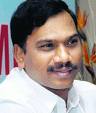

New Delhi: Telecom Minister A Raja has told Parliament that there was complete transparency in the allocation of 2G spectrum and he had nothing to hide. But hide he did -- from the Prime Minister.CNN-IBN has evidence to show that Raja defied Prime Minister Manmohan Singh and his written suggestion of auctioning 2G spectrum. A series of documents available with CNN-IBN show Raja was in a clear hurry in allotting spectrum, overruled the Prime Minister and even dismissed suggestions of taking the matter to the high-level EGOM (empowered group of ministers).A letter of 2 November 2007 from Singh to Raja clearly asks him to ensure fairness and transparency and cautions him against taking any measures without informing the Prime Minister’s Office. "Let me know of the position before you take any further action in this regard," says Singh’s letter to Raja.In the two-page letter, Singh objects to Raja's model of first-come-first-serve policy in allotting spectrum, and the 2001 pricing for sale in 2008.The PM also clearly instructs him to consider introduction of a transparent methodology like an auction and revision of the entry free.The letter appears lost on Raja, who responded to Singh the same day but offered no real reasons for his decision. His letter remains silent on Singh’s idea of an auction.For days there is no communication and then in a letter on December 26, Raja tells Singh he has received a consent from then External Affairs Minister Pranab Mukherjee and the Solicitor General.The locus standi of the two is questionable in this case but what further challenges the Telecom Minister is a letter from the Ministry of Law and Justice, which was always clear that the issue had to go to an EGOM for consideration.The documents make it clear that Raja was in a hurry and flouted Singh's written directions to take the PMO’s clearance before acting on the matter. He also risks being charged with dismissing the important suggestion of taking this matter to an EGOM that would have ensured transparency.The fact the government decided to auction 3G allocations is often seen as an admission that 2G was not so great and transparent as Raja claims.History of rowThe government issued new telecom licenses in January 2008 along with bundled 4.4 MHz spectrum for Rs 1,658 crore. The Opposition alleges that the licenses were given at 2001 prices and caused huge loss to the government. More on: spectrum allocation row Previous Story Spectrum scam returns to haunt A Raja Comments0 Existing Member Login Username Password Remember my password on this computer Not a member yet? All comments will be published after moderation. More from The Gallery The Gallery Inter reaches Champions League final Bayern sail into Champions League final Bull gores Spanish matador
Subscribe to:
Posts (Atom)